
Why KL and PJ venue shortlists get messy fast
Kuala Lumpur and Petaling Jaya offer a dense mix of hotel ballrooms, freestanding halls, industrial lofts, and rooftop decks. That variety helps when you need an event hall for a seated dinner, an event space for a product launch, or a quieter venue for a half-day workshop. It also creates noise. Brochures quote maximum capacity. Photos hide pillars. “Central location” can still mean a painful LRT-to-lift shuffle with guests in heels.
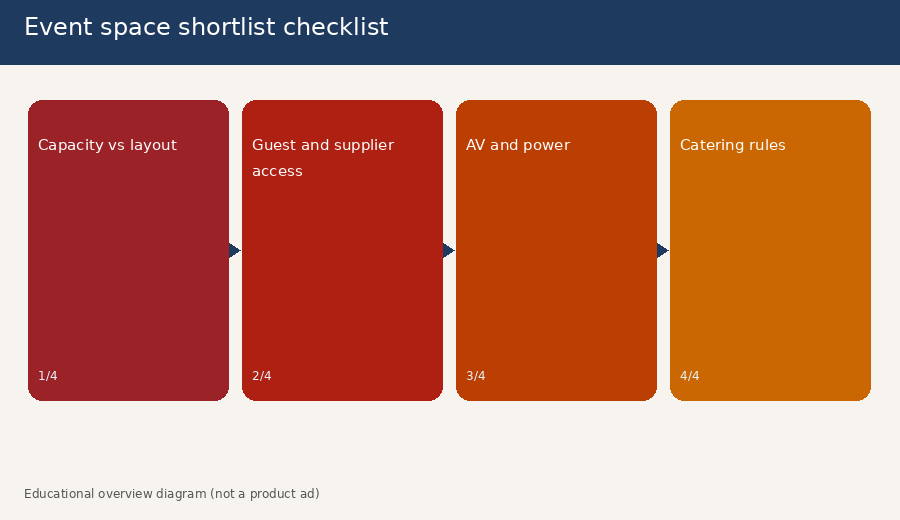
Industry planners treat venue choice as an early lock, not a late aesthetic decision. Guides on venue and vendor sourcing from Meeting Professionals International stress location, inclusions, timeframe, and what is not in the hire fee. The same lens works for Malaysia corporate and social programmes: shortlist on capacity for your layout, guest and supplier access, AV reality, and catering rules before you fall for a mood board.
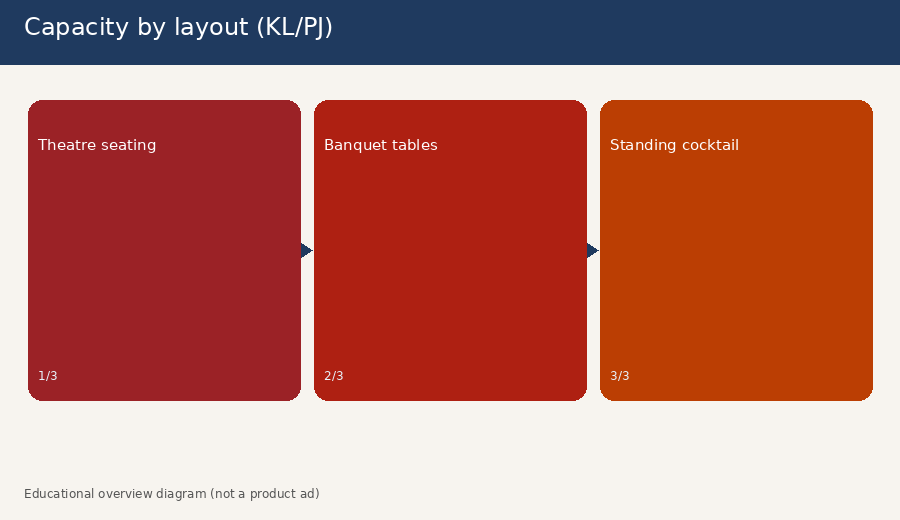
Capacity that matches the layout, not the brochure
Ask every candidate for capacity by layout: theatre, classroom, banquet rounds, cabaret, and standing cocktail. A room that holds 400 theatre-style may only seat 220 comfortably once you add a stage, LED wall, buffet line, and VIP table. Fire and safety limits still apply; usable comfort is often lower. The Event Leadership Institute’s teaching on gauging capacity (see video below) echoes a simple rule: density changes with furniture and flow, not just floor area.
When you compare event hall capacity checks across KLCC, Bangsar, Damansara, and PJ corridors, put your expected headcount band in writing (for example 180 to 220 seated). Drop any space that only works if half the guests stand. Request a scaled floor plan with your preferred set marked, not a generic stock diagram.
Access, parking, and bump-in reality
PCMA advice on matching event and destination puts loading, guest arrival, and concurrent events high on the site-visit list. In KL and PJ that means more than a Google Maps pin. How do guests arrive after 6 pm traffic on the Federal Highway or Penchala Link? Is there paid parking with enough evening turnover, or a realistic Grab drop-off that will not block the porte-cochère? Are lifts usable for guests with mobility needs, or only the ceremonial staircase in the photos?
Supplier access matters as much as guest access. Note loading dock height, truck turn radius, freight lift booking windows, and whether another wedding or conference is bumping in on the same day. A beautiful event space rental checklist is incomplete if your caterer and AV crew cannot get in three hours before doors. Write the bump-in and bump-out windows into every proposal comparison.
AV, power, and what “in-house” really means
Ask what is house equipment versus exclusive preferred vendor. Built-in projectors and a basic PA can be a bargain for a town hall. A product launch with IMAG, wireless lavs, and a large LED wall may still need an external production house, plus power drops and rigging points the venue must approve. Confirm internet bandwidth for registration or hybrid streams, who controls house lighting, and whether a tech rehearsal is included or billed hourly.
National Press Club venue guidance also flags in-house AV and catering as convenience, not automatic quality. Treat “we have AV” as a starting claim. Take a walk with your production lead if the show has more than slides and a handheld mic.
Related watch: how planners gauge usable venue capacity beyond a single brochure number.
Catering rules before you taste the menu
Many KL hotel halls require in-house F&B with a minimum spend. Freestanding PJ venues may allow approved outside caterers, charge corkage, or insist on kitchen access rules and Certificates of Insurance. Confirm alcohol policy, halal handling, prayer room proximity, cut-off times for final headcount, and overtime kitchen fees. Menu tastings are useful only after those rules are clear; otherwise you compare dishes you are not allowed to serve.
PCMA’s tips for matching event and venue also remind planners to weigh total value: Wi-Fi, staging, kitchen, and loading infrastructure that reduce day-of risk. Use the same total-cost view when this overview in Kuala Lumpur or Petaling Jaya rather than ranking by room hire alone.
Close the shortlist with four comparable scores
After two or three site visits, score each option on the same sheet: layout capacity, guest and supplier access, AV and power fit, catering policy fit. Keep one backup date or room in case the first choice’s blackout or minimum spend moves. The goal is not a forever favourite venue. It is a shortlist you can defend to finance, brand, and the production crew on a normal Tuesday in Malaysia’s densest event corridor.